The International Workshop on Robotics & Automation is designed to promote innovation, collaboration, and hands-on experience in the field of robotics among students. This event aims to bring together bright minds from diverse cultural and academic backgrounds to explore the challenges and possibilities of modern robotics through both educational and competitive activities.
The workshop encourages international collaboration by fostering teamwork among participants from various countries, helping them to build global connections and intercultural communication skills. In addition, this workshop provides a valuable opportunity for students to build a strong academic and technical portfolio that can be used to enhance university applications.
This workshop aims to encourage teamwork and problem-solving through real-world engineering tasks, cultivate international collaboration and cultural exchange among participants, stimulate interest and innovation in the field of robotics through friendly competition, and provide a platform for young talents to showcase their creativity and engineering capabilities.
Participants join the virtual meeting room via Google Meet
By the Director of KMUTNB Techno Park / Representative
Competition guidelines and evaluation criteria
Design Principles, Robot Assembly/Mechanical Tuning
Short break
Design Principles, Robot Assembly/Gripper
Lunch break
Installation Demo, Microcontroller Connection, I/O Testing
Short break
Programming for Robot Interface
Questions, answers and workshop conclusion
Team registration
By the Director of KMUTNB Techno Park / Representative
Competition guidelines and evaluation criteria
Microcontroller Basics, Basic Robot Control Systems, Usage Examples
15 Minutes Break
Gripper Design, Motion Control Programming, Competition Mission Briefing
Lunch break
Robot Setup, System Check, and Mission Rehearsal
• Team Performance Showcase
• Mission Execution (Object Grabbing and Moving as Specified)
• Evaluation based on Speed, Accuracy, and Efficiency
30 Minutes Break
Group Photo
Closing remarks
A “Smart City” refers to the application of digital technology, or information and communication technology, to improve the quality of life for its residents, provide community services, reduce costs, and efficiently decrease consumption.
A “Smart City” uses information technology to monitor, analyze, and integrate data to intelligently respond to the various needs of its citizens. This includes daily life, environmental protection, public safety, city services, and industrial operations, using advanced information technology to intelligently manage and administer the city. The goal is to create a better quality of life for its citizens, foster unity, and ensure the city's sustainability.
A “Smart City” is relevant to the modern era by integrating technology into the lives of its citizens, whether in transportation, energy use, or infrastructure, making the city a convenient and fulfilling dream city. The concept of a Smart City emerged alongside the rapid development of the Internet of Things (IoT), which forms the basis for connecting devices and objects around us to the internet communication network, as well as intelligent urban planning to support a comfortable lifestyle.
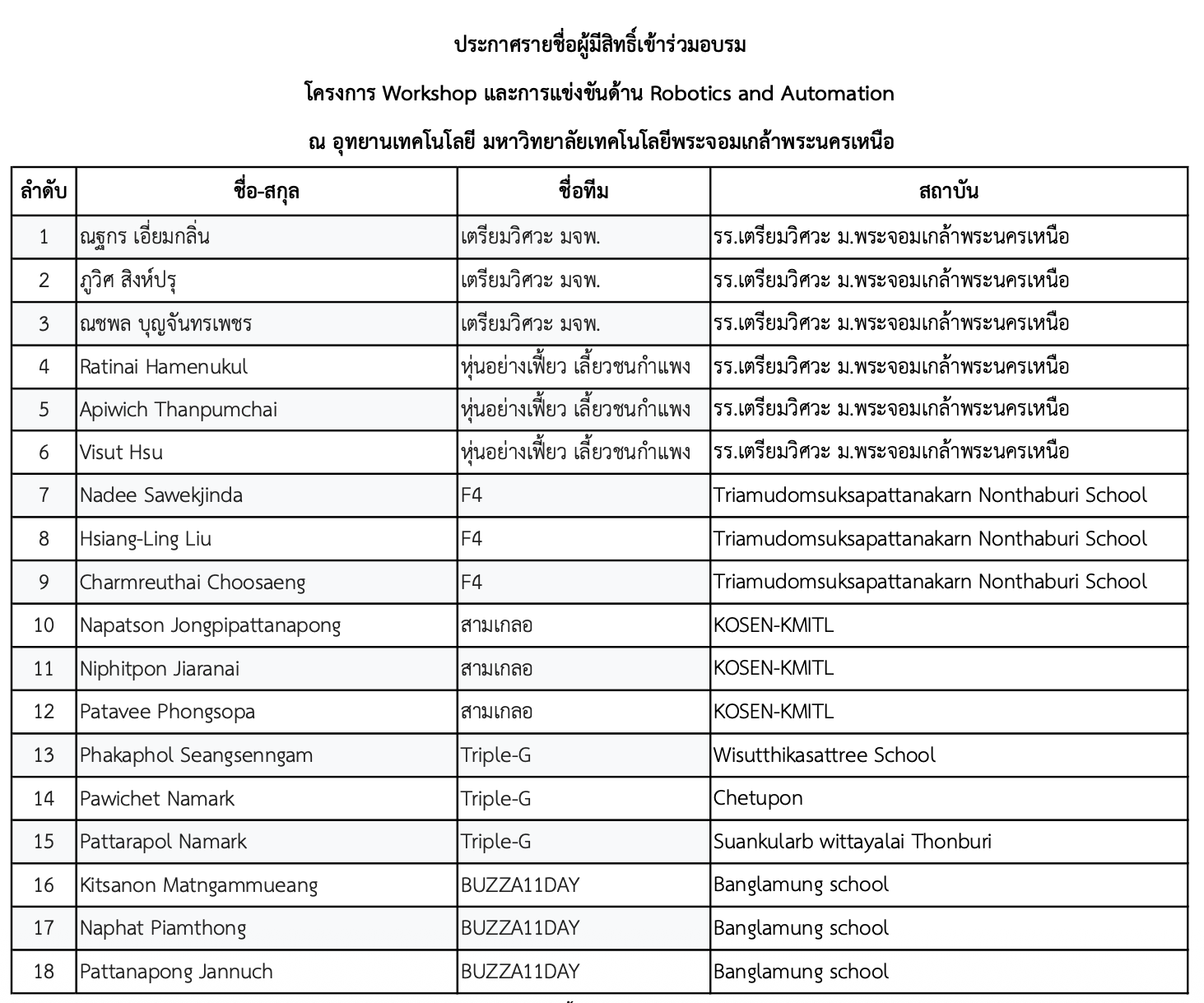
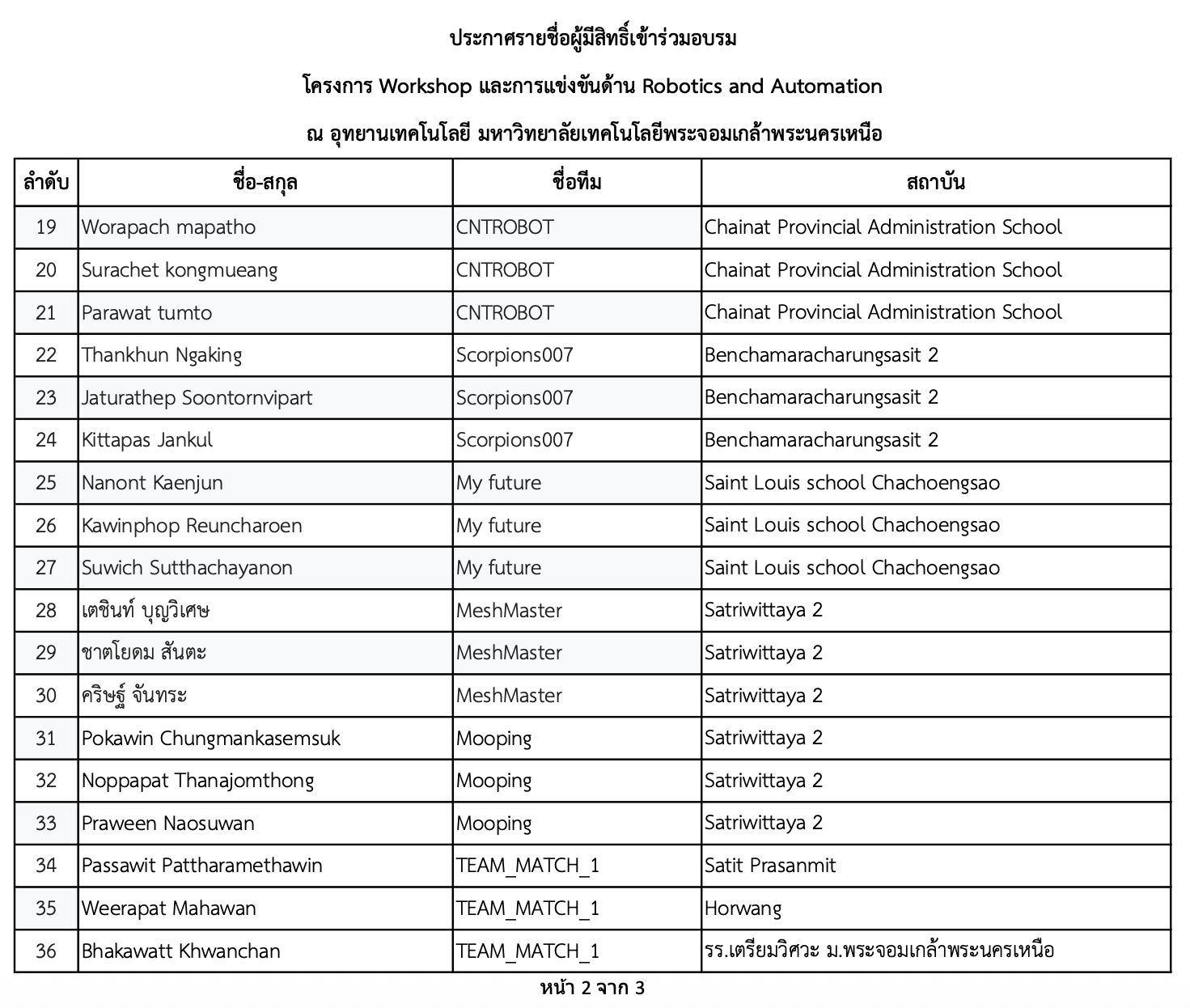
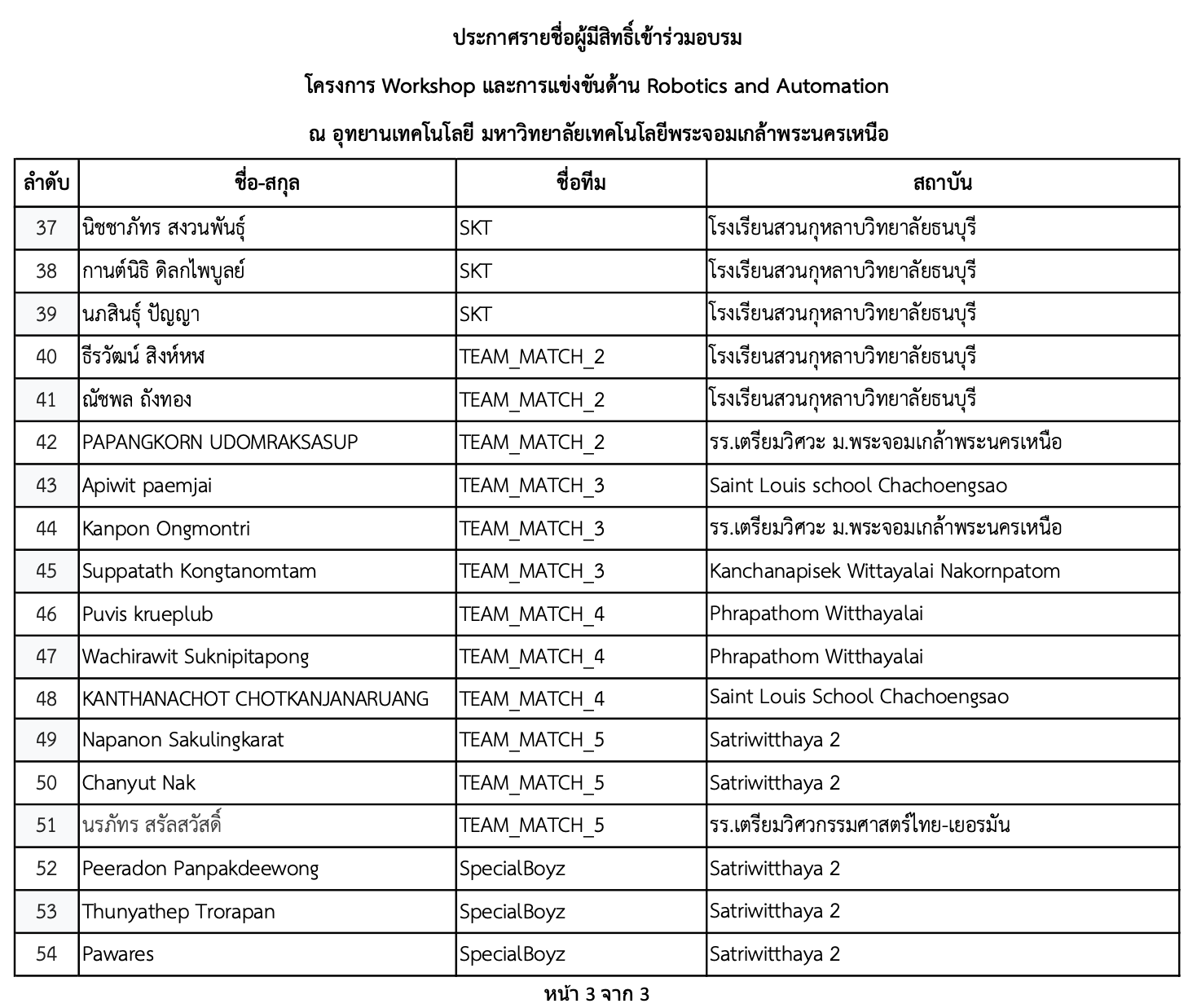
A team must consist of 3 members.
Examples of competition fields
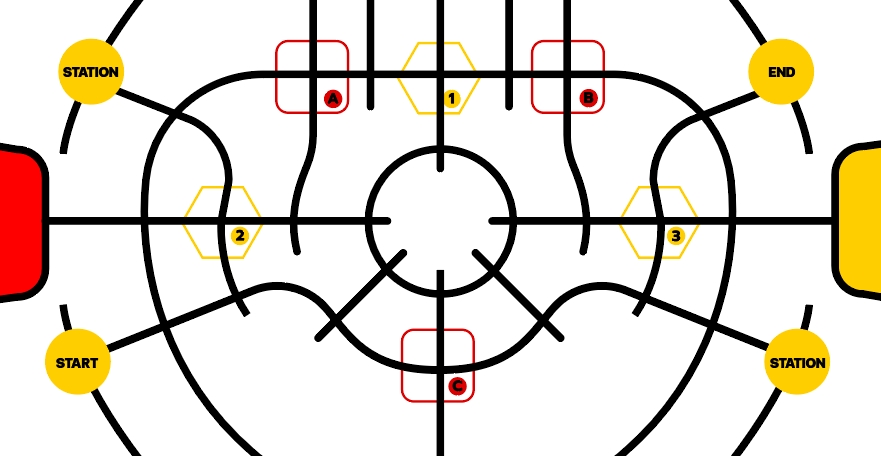
The MN robot is placed at STATION and begins operation from this point.
The MN robot's tasks are to pick up energy bars from the Energy Storage and distribute them according to city locations where energy is needed. Energy bar from green, yellow, and red stars must be placed at usage points A, B, and C, respectively. (The order of placement can be changed, but green must go to A, yellow to B, and red to C).
The AUTO robot is placed at the START point and ends the operation at the END point.
The AUTO robot can start when the MN robot has successfully picked up an energy bar from the Energy Storage.
The AUTO robot's tasks are to pick up energy bars from point A and place them at charging point 1, from point B to charging point 2, and from point C to charging point 3, without any specific order. If an energy bar falls over at the charging point, a score is still awarded, and a team member is allowed to reposition it (but must request a permission from the field referee).
The MN robot resumes operation, when an energy bar is placed at a charging point. It moves the energy bar from that charging points 1, 2, or 3 to green, yellow, or red stars, respectively, and then return to the STATION.
You must obtain permission from the referee every time; otherwise, you may lose points.
Join us as a sponsor and showcase your commitment to advancing robotics, automation, and manufacturing technologies. Your support will help us create an exceptional conference experience while providing your organization with valuable exposure to industry leaders, researchers, and innovators.
Choose from our carefully designed sponsorship tiers, each offering unique benefits and opportunities to connect with our distinguished audience of professionals and academics.
| Sponsorship Tier | Contribution (THB) | Key Benefits |
|---|---|---|
|
Super Platinum
|
฿50,000 |
|
|
Platinum
|
฿25,000 |
|
|
Diamond
|
฿15,000 |
|
|
Gold
|
฿10,000 |
|
|
Silver
|
฿5,000 |
|
This workshop is not only a learning platform but also a celebration of creativity and engineering spirit in robotics. By combining education and competition, it offers a well-rounded experience that helps develop both technical competencies and interpersonal skills necessary for future engineers and innovators.